Posts

Arrival in McMurdo, Training, Pressure Ridges, and Seal Pups
Image
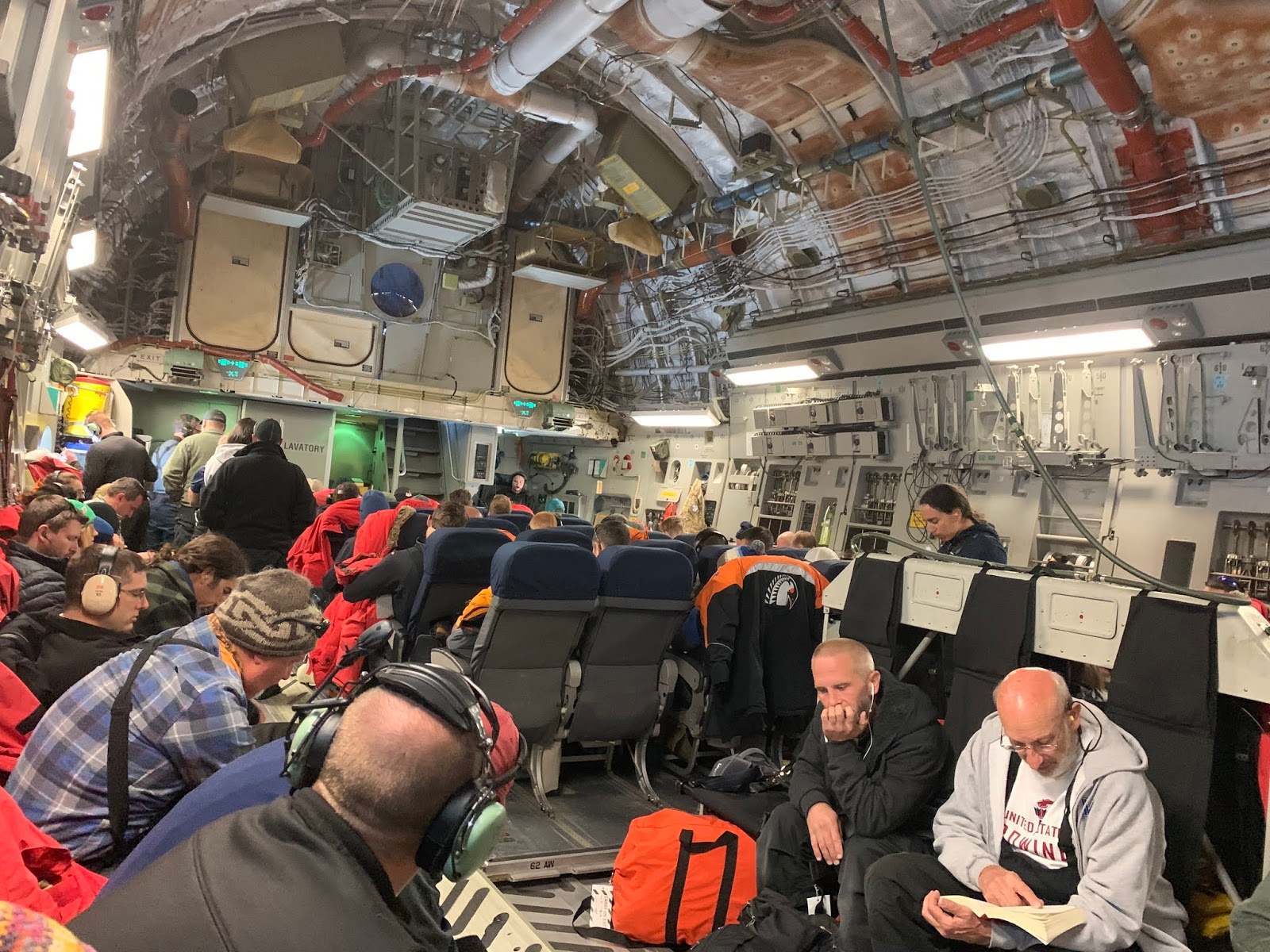
Greetings from Antarctica! After a three-day delay in Christchurch, we successfully made it to McMurdo on Thursday (Wednesday in U.S. time). The ride south in the C-17. First view of Antarctica out the plane window. First steps on the ice - view of the C-17 First steps on the ice - Mt Discovery First steps on the ice - Mt Erebus ... the plume could just barely be seen at the summit as the winds were carrying it away in the opposite direction. First steps on the ice - The Deltas ... one of the many types of vehicles used to transport people. The McMurdo baggage claim. It's been a busy few days with lots of training since arriving. The arrival briefing is the first thing everyone gets upon arrival to the station. Field safety training is one of our longer training sessions but provides necessary information on how to light the stoves, set up the tents, etc. in case you get caught unexpectedly in a storm. Field Safety, Enviro...

Boomerang .... shuttle style

Image
Greetings from Christchurch! I'm in transit to the ice for our last field season for this project and I thought I'd send a quick update before we head south. Our departure date to the ice was scheduled for November 4th. That meant November 3rd was our initial reporting date for clothing issue, flu shots and other initial training. This year, some of the training that is normally done on the ice (fire safety, light vehicle and environmental) was done during the first day. While this made for a longer first day, it meant less delays in getting to our sites once we got to the ice so we were happy to do it. Nearly 90 people were scheduled for our flight, partially due to a cancelled flight the Friday prior, and a good portion of them were headed on to the South Pole. Approximately a third of the people going had never been to Antarctica before (which is pretty typical). After the morning training sessions, we had lunch and then it was time to try on our ECW (Extreme Cold Weather)...

Season 3: The Beginning of the End

Image
Once again, another year has flown past and I find myself preparing for another deployment to the ice. As with years past, I've been having to go through the PQ (physical qualification) process to assure NSF that I am healthy enough to travel and stay there. This requires a full physical, a trip to the dentist (no one wants to get a toothache down there) and a full blood workup (so. much. blood.). Our tentative dates are to be on the ice beginning November 4th and return to the U.S. sometime during the first week in December. As you might have guessed from the title, this is the last year of my three-year grant and the purpose of our trip is to remove all of our equipment and have it shipped back to the United States. Under normal conditions elsewhere, this might be a week-long endeavor, but nothing is ever that easy in Antarctica. Typically the first week on the ice is spent in training, most of which will be a refresher, to make sure we are safe on the ice. That leaves roughly ...

Free Willie!!!

Image
How do you dig out a 40-foot diameter fence buried six feet deep in snow on an ice shelf? It sounds like the beginning of a (really) bad joke. This question vexed a number of people besides ourselves, including National Science Foundation (NSF) representatives, McMurdo station managers, Fleet Operations personnel and others. As the weeks started to slide by, I was somewhat increasingly concerned that I was going to get to know my shovel very, VERY well when we suddenly got an email saying that there was "a plan" to free the shield and instrument and this plan would begin the Sunday following Thanksgiving. But before this plan could take place, we needed to dig out all the wiring that was running between the shield and the datalogger. So, we began the arduous task of trenching down to the cabling to free it from the snow. Looking down the beginning of the trench we dug to remove the cable Halfway along the trench. It took approximately 2 hours to dig the entire c...